
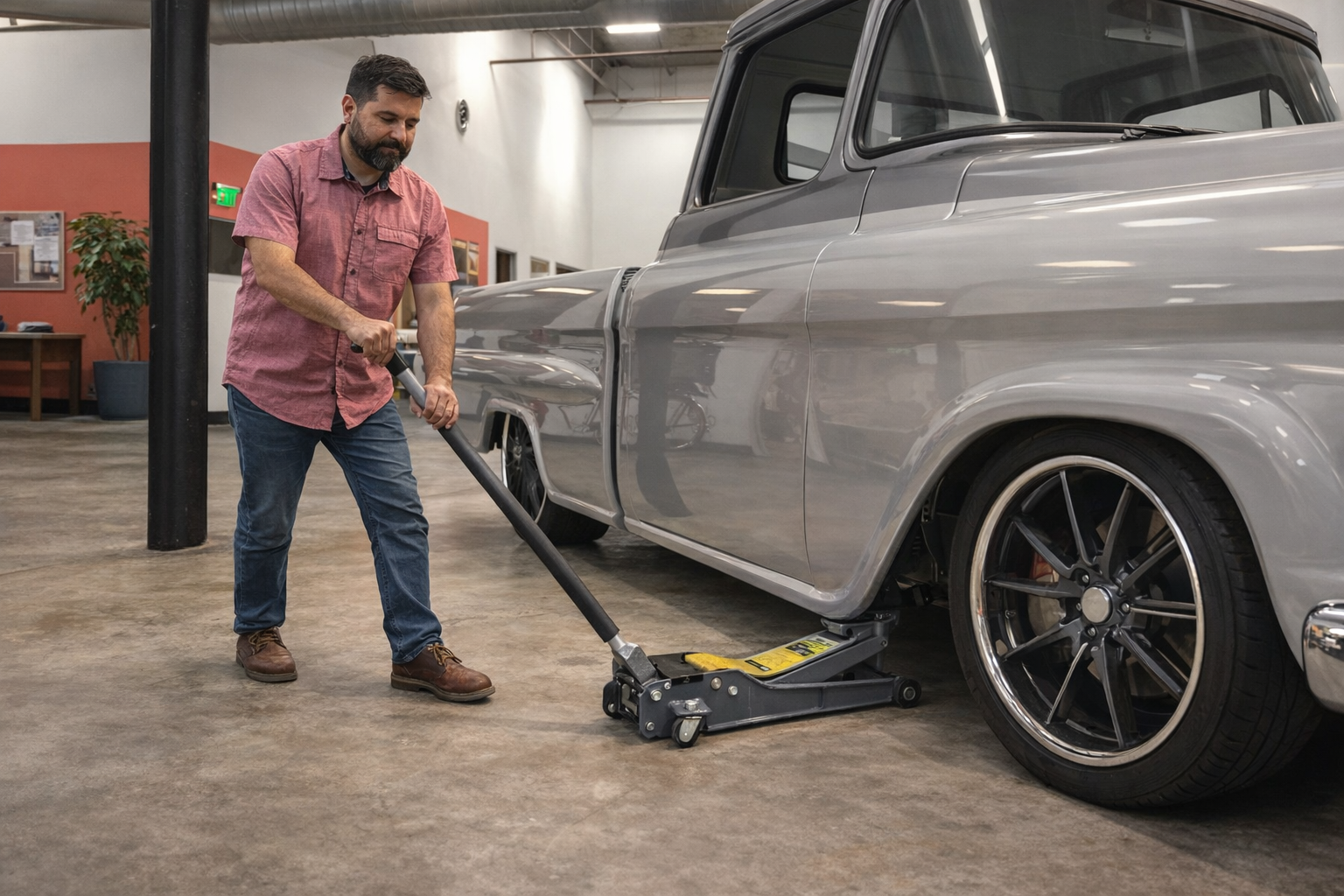
If you work on your own vehicles, a hydraulic jack can be one of the most useful tools in your garage. Whether you’re rotating tires, changing brakes, or lifting a vehicle to place jack stands, the right floor jack makes the job faster and safer thanks to strict regulations.
The challenge is that hydraulic jacks come in a wide range of styles, weight ratings, and lift heights. Some are built for low-clearance cars, others for heavier trucks, and not every jack is designed for regular garage use. With so many options available, it helps to understand what makes the most difference before buying.
This guide breaks down the best hydraulic jacks for common garage and shop use, along with key factors to look for so you can choose a jack that fits your vehicle, your space, and how often you lift.
Best hydraulic jacks
Some jacks are built for low cars, others for heavier trucks. Let’s compare the best hydraulic jacks that you can grab today.
- Ranger RFJ-4000AL

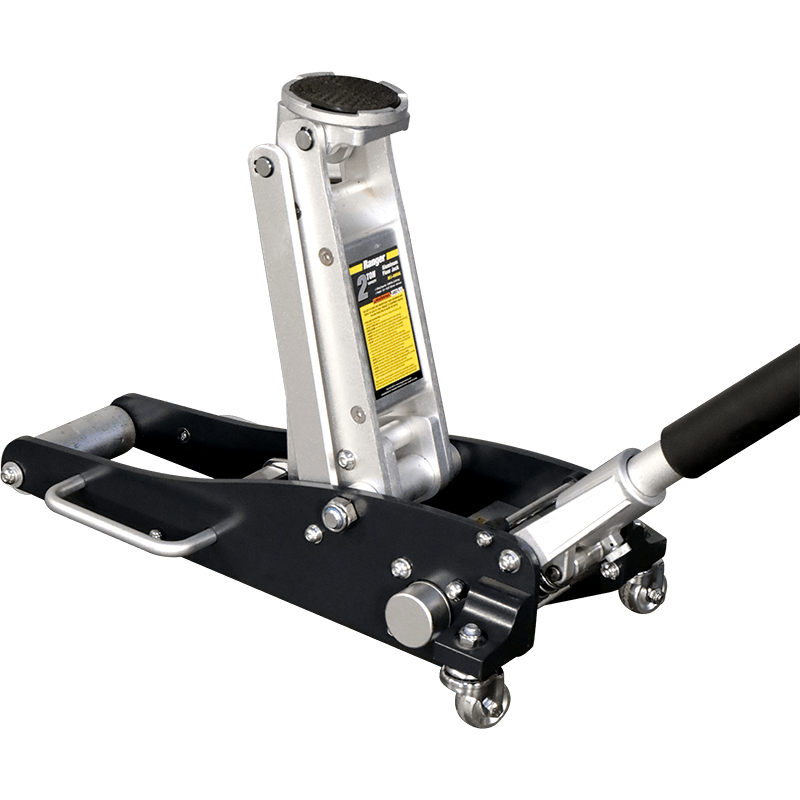
The Ranger RFJ-4000AL is a lightweight aluminum floor jack made for fast, secure lifting in both home garages and performance-focused shops. Ranger designed this jack to deliver the feel and stability of a heavier steel unit without the extra weight. At just 39 lbs., it’s easy to move around the garage, yet strong enough to handle low-clearance vehicles that need quick, precise lifting. The extra-low profile, quick-pump hydraulics, and wide front roller make it well-suited for cars with side skirts or tight approach angles.
Features
- 4,000 lb (2 ton) lifting capacity
- Aircraft-grade billet aluminum construction
- 3.5 in. to 17.5 in. lift range
- Dual-plunger quick-pump hydraulic system
- Built-in safety overload valve
- Low-profile single-piece front roller
- Oversized knurled aluminum handle with foam guard
- Double-sealed hydraulics
- Approx. 39 lb
Pros
- Lift point in as few as 3 pumps
- Extremely lightweight for easy carrying and positioning
- Low-profile design to accommodate lowered or performance cars
Cons
- Not intended for heavy work trucks or SUVs
Learn more about the Ranger RFJ-4000AL
2. DAYTONA 3 Ton Low-Profile Professional Floor Jack
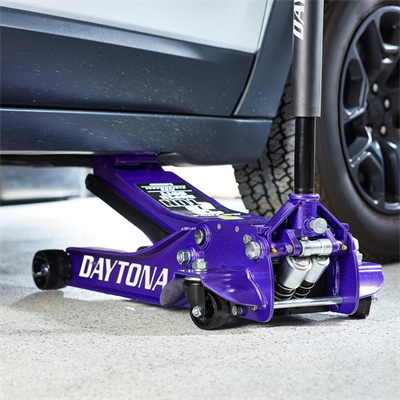
The DAYTONA 3 Ton Low-Profile Professional Floor Jack is a steel floor jack built for daily garage and shop use. This model uses an extra-low profile to slide under vehicles with limited clearance while still offering enough lift height for trucks and SUVs. A dual-piston hydraulic system reduces the number of pump strokes needed during lifting.
Features
- 3 ton (6,000 lb) lift capacity
- 3-1/4 in. to 19-7/8 in. lift range
- Dual-piston hydraulic system
- Steel construction
- Industrial powder-coated finish
- Rotating, removable jack saddle
- Ball-bearing rear swivel casters
- 45 in. handle length
- 79 lb product weight
- ASME-PASE compliant
Pros
- No ramp or block necessary
- Quick vehicle lift
Cons
- Heavy overall product weight
- Large footprint
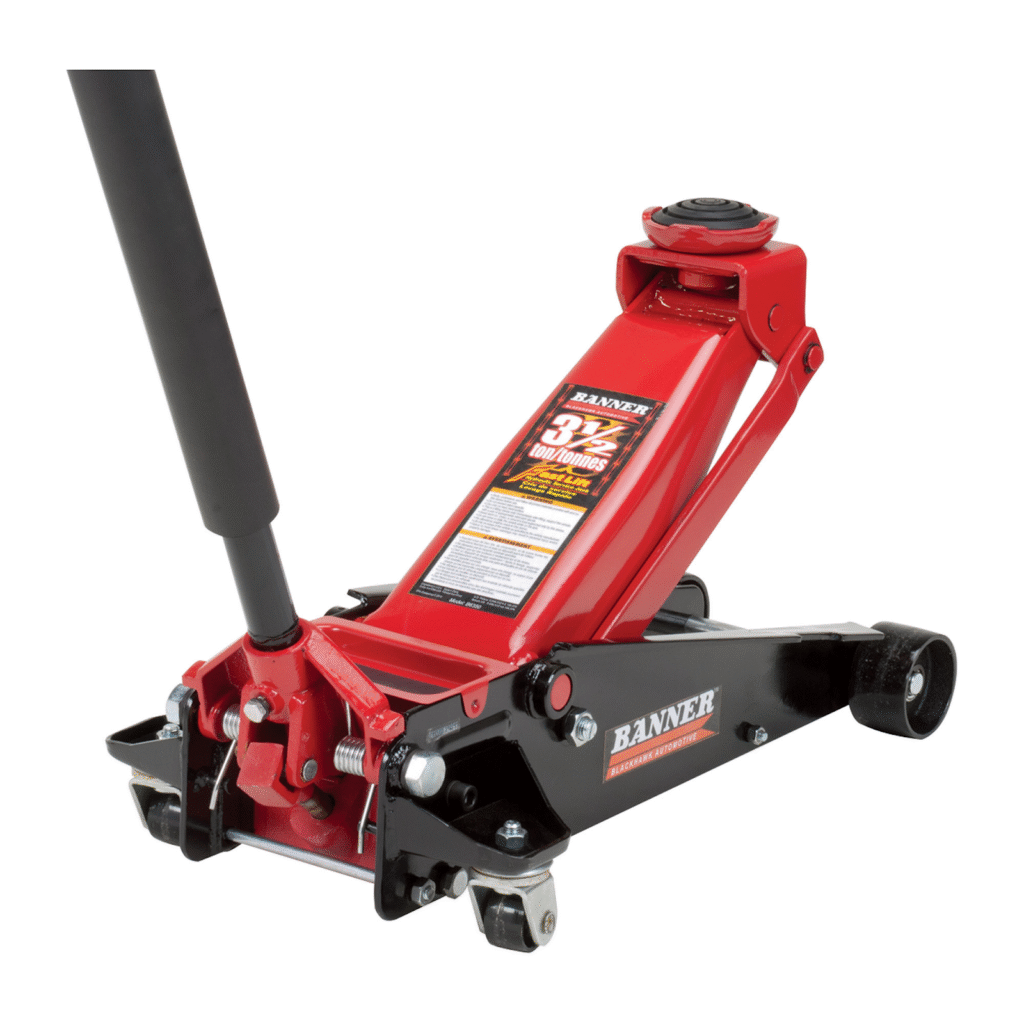
3. Blackhawk 3.5 Ton Fast Lift Service Jack

The Blackhawk 3.5 Ton Fast Lift Service Jack is a steel service jack made for heavier automotive lifting. Blackhawk makes traditional service jacks with higher lift capacities and reinforced components. This model uses a fast-lift hydraulic design that quickly reaches the jacking point before the load is applied. A swivel saddle and reinforced joint help with positioning under different vehicles while maintaining controlled movement during lifting.
Features
- 3.5 ton (7,000 lb) lift capacity
- Fast-lift hydraulic technology
- Steel construction
- 22 in. lift range
- Swivel saddle
- Rugged universal joint
- Built-in internal safety valve and bypass device
- Rust- and water-resistant
- 60 in. handle length
- Red powder-coated finish
Pros
- High lifting capacity
- High maximum lift height
Cons
- Heavy build
- Not suitable for low-profile cars
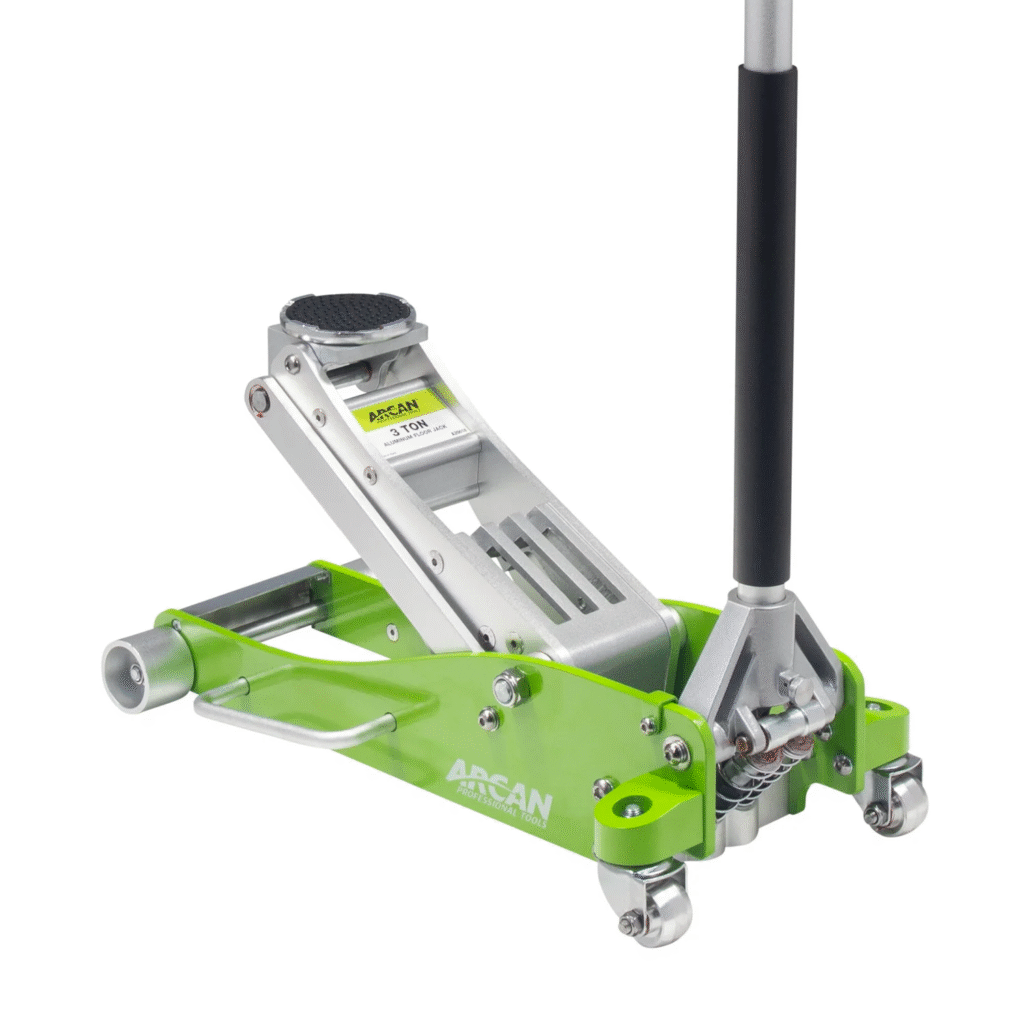
4. Arcan 3 Ton Aluminum Floor Jack
The Arcan 3 Ton Aluminum Floor Jack is a lightweight floor jack built around aircraft-grade aluminum. Arcan focuses on reducing jack weight without giving up everyday lifting strength. This jack uses dual pump pistons to bring the saddle up to the jacking point quickly. Protective touches like a rubber saddle and foam handle bumper help with contact damage when working around painted or low-clearance vehicles.
Features
- 3 ton (6,000 lb) lift capacity
- 3.78 in. to 18.9 in. lift range
- Aircraft-grade aluminum construction
- Dual pump pistons
- Reinforced lift arm
- Rubber saddle and foam handle bumper
- Side-mount carry handle
- Two-piece handle
- Bypass and overload safety valves
- Approx. 52.9 lb
- ASME PASE-2014 compliant
Pros
- Lightweight
- Quick lifting action
Cons
- Less efficient plant under load
- Lower stability for frequent lifting of heavier trucks or SUVs
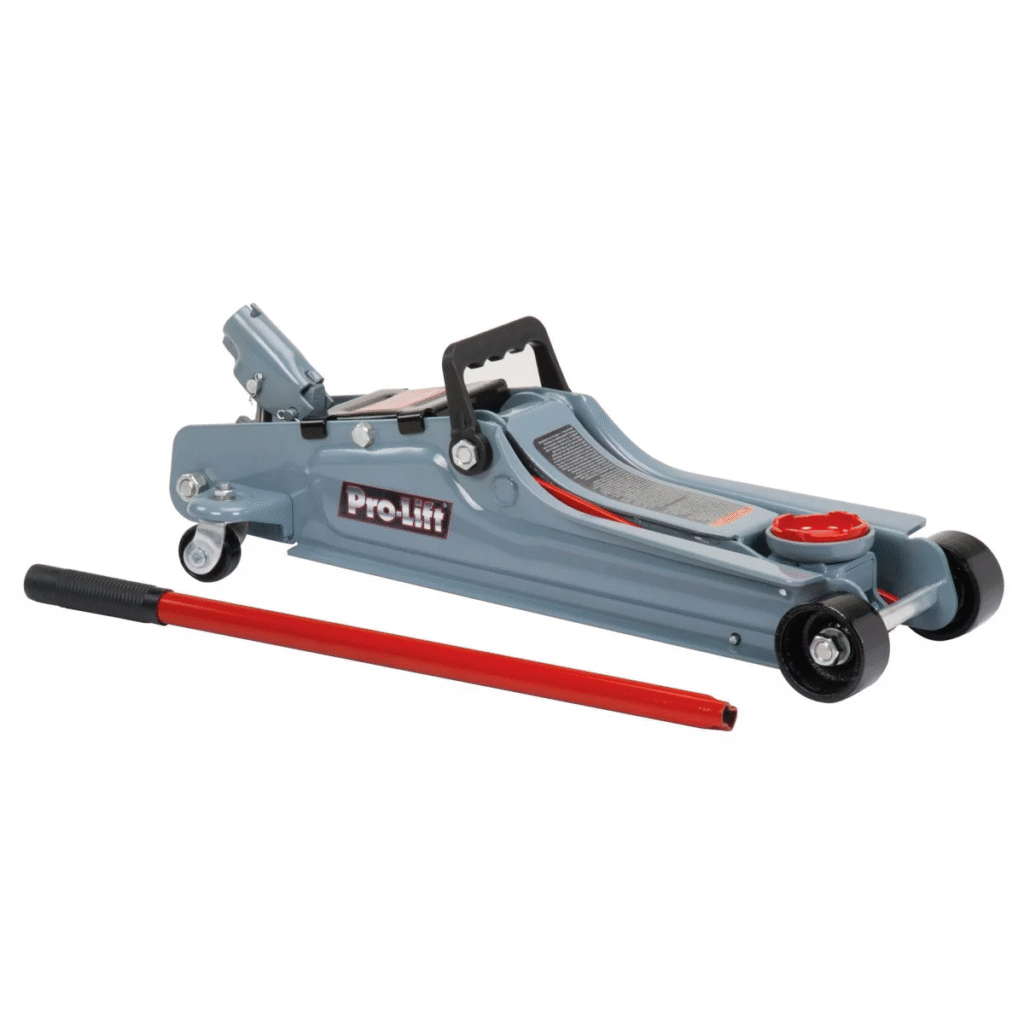
5. Pro-Lift F-767

The Pro-Lift F-767 is a compact, low-profile floor jack that can slide under vehicles with limited ground clearance. This hydraulic jack has a short chassis and extra-low starting height to position under cars that sit close to the ground. Its steel construction and built-in safety features are aimed at controlled lifting for basic maintenance tasks.
Features
- 2 ton (4,000 lb) lift capacity
- 3 to 14 in. lift range
- Extra-low profile design
- Hydraulic lifting mechanism
- Heavy-duty steel construction
- Built-in safety valve
- Patented bypass device to prevent over-pumping
- Rust-resistant finish
- Compact chassis design
Pros
- Low-clearance without ramps
- Compact size
Cons
- Lower lift height
- Unsuitable for heavier trucks or SUVs
6. Husky 2-Ton Hydraulic Trolley Car Jack

The Husky 2-Ton Hydraulic Trolley Floor Jack is a compact hydraulic jack built for lighter vehicles. Rather than aiming for high lift heights or heavy-duty capacity, this jack focuses on portability. The removable handle and swivel saddle are designed to make short, routine jobs feel less awkward.
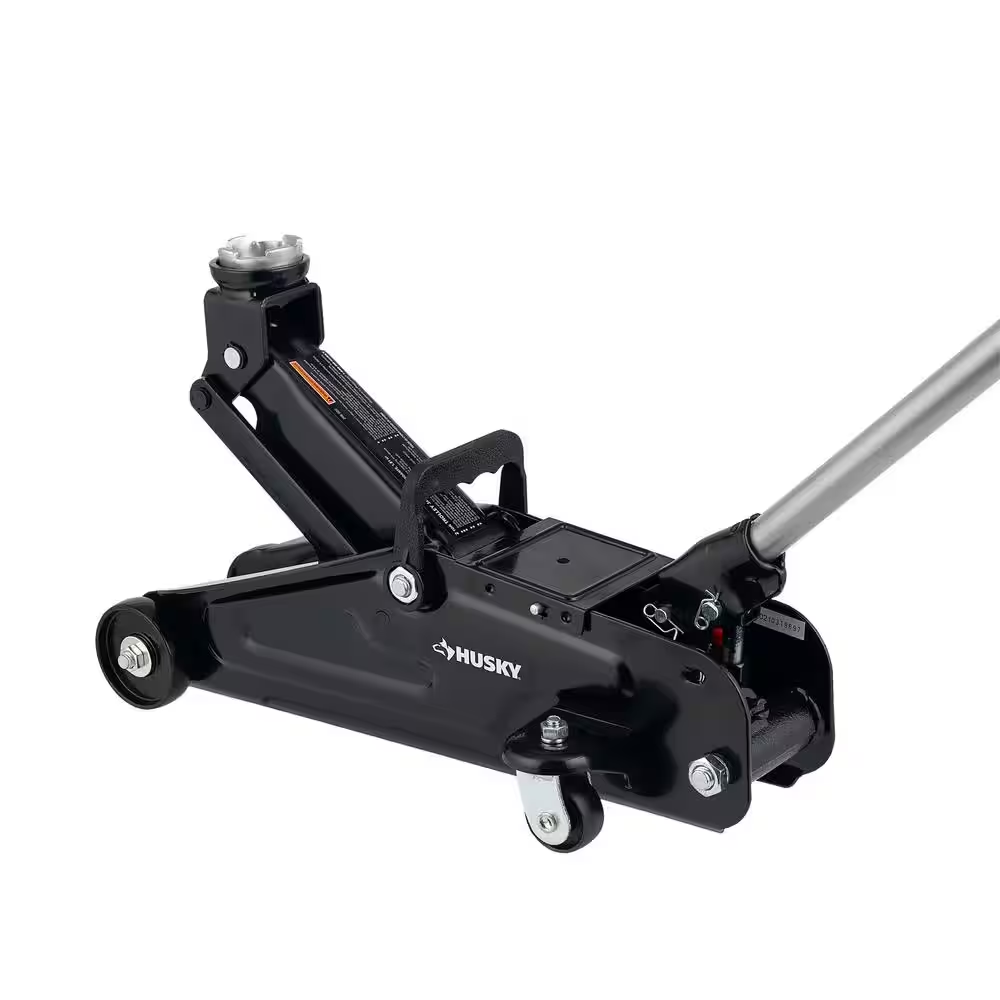
Features
- 2 ton (4,000 lb) lift capacity
- 5 in. to 13 in. lift range
- Hydraulic trolley-style design
- Heavy-gauge steel frame
- 360° swivel saddle
- Ball-bearing swivel casters
- Removable handle
- Built-in carrying handle
- Rust-resistant finish
Pros
- Compact size
- Easily maneuverable for quick tire changes
Cons
- Limited lift height
- Short handle
Factors to help decide on a hydraulic jack
Hydraulic jacks can work in very different ways, and the right choice depends on what you drive and where you’re doing the work. Let’s look at a few key factors so you can avoid buying a jack that’s underpowered, awkward to use, or simply not suited for your garage.
Weight capacity
The weight capacity tells you how much the jack can safely lift, and it’s one of the most important specs to get right. As a general rule, your jack should be rated for 75% of your vehicle’s total weight, since you’re usually lifting one end at a time. Choosing a jack with extra capacity isn’t a bad thing here. It gives you a safety margin and usually means a more stable lift.
Type
Hydraulic jacks come in a few main styles, and each fits different situations. Floor jacks are the most common for garages. They roll under the vehicle, lift smoothly, and work well for tire changes, brake jobs, and general maintenance.
Bottle jacks are more compact and store easily, but they need more clearance under the vehicle and can feel less stable on uneven surfaces. Low-profile jacks are designed for cars that sit close to the ground, like sports cars or lowered vehicles. If you’re working in a garage and lifting regularly, a floor jack is usually the easiest and safest option to live with.
Safety
A hydraulic jack is meant to lift a vehicle, not hold it indefinitely. Built-in safety features help reduce risk during lifting, but you should always plan to use jack stands once the vehicle is raised. Look for a controlled descent valve so the vehicle lowers smoothly, a wide, stable base that won’t rock or tip, and a solid saddle that grips the lifting point without slipping
Lifting points
Every vehicle has specific spots where it’s safe to lift, usually along the frame or designated jack points under the car. A good hydraulic jack should line up easily with those points without forcing you to reposition the vehicle or crawl around too much. If the jack doesn’t reach your vehicle’s lifting points comfortably, it quickly becomes frustrating and less safe to use.
Portability and storage
Think about how often you’ll move the jack and where it will live when it’s not in use. A heavy-duty jack may feel solid, but it can be awkward to drag around a small garage. For home garages, a jack that’s easy to roll, steer, and tuck away tends to get used more often.
Starting height
The starting height is how low the jack sits before lifting. If your vehicle sits low, a standard jack may not fit underneath at all. For example, lowered cars and sports cars often need a low-profile jack. Trucks and SUVs usually have no issue with standard starting heights. Checking the jack’s minimum height against your vehicle’s clearance can save you from having to use wood blocks or ramps just to get the jack in place.
Find the best hydraulic jack for all of your lifting needs
Hydraulic jacks vary widely in capacity, lift range, and design, and those differences matter once you start using one regularly. Choosing a jack that matches your vehicle weight, garage space, and how often you lift makes everyday jobs safer and far less frustrating, whether you’re doing routine tire changes or heavier maintenance work.
For those looking for floor jacks, low-profile options, or higher-capacity jacks for trucks and SUVs, Wrenchers brings the options together in one place. You can compare trusted brands, review specs side by side, and choose a hydraulic jack that fits your vehicle and work area. Clear product details, financing options, and support simplify the buying process from start to finish.
Shop hydraulic jacks at Wrenchers.
Best Hydraulic Jacks FAQs
What is the 3/4 rule for floor jacks?
The 3/4 rule means you should only lift up to about 75% of a jack’s rated capacity during regular use. This gives you a safety buffer and reduces strain on the jack’s hydraulic system.
For example, a 3-ton floor jack is rated for 6,000 lbs, so the 3/4 rule puts your recommended working limit at around 4,500 lbs. If the corner or axle you’re lifting weighs roughly 4,500 lbs, you’re within that threshold. Following this guideline helps extend the life of the jack and lowers the risk of hydraulic failure during lifting.
What weight capacity should I look for in a hydraulic jack?
Start by checking your vehicle’s curb weight in the owner’s manual or on the manufacturer’s website. Since a jack usually lifts one end of the vehicle, look for a jack rated to handle at least half of that weight. Choosing a jack with extra capacity beyond that number adds stability and reduces strain on the hydraulic system. If you work on multiple vehicles or may upgrade later, sizing up can help avoid replacing the jack down the road.
What type of hydraulic jack is best for low-clearance vehicles?
For low-clearance vehicles, a low-profile floor jack is usually the best choice. These jacks have a lower starting height, allowing them to slide under sports cars, lowered vehicles, and cars with tight front clearance. Standard floor jacks or bottle jacks often sit too tall to fit underneath without ramps or blocks.
