
Two-Post Lifts for Vehicles
Two-post car lifts are the preferred lifts for service professionals, and for good reason. Two-post lifts allow far more access to the vehicle than any other available lift. A great addition to any professional shop, Wrenchers’ two-post lifts are expertly crafted and built to last. We know many factors come into play when considering a two-post lift, including size, reliability, build quality, safety, and ALI certification. But, with Wrenchers, finding the perfect two-post car lift is as easy as can be.
2-Post Car Lifts for Sale
Vehicles on the road today come in all shapes and sizes, which is why we carry a wide variety of two-post lifts to meet your specific needs. From trusted brands such as BendPak, Challenger, and MaxJax, our selection of lifts sports professional-grade quality and feature lift capacities ranging from 7,000 lbs. to an impressive 18,000 lbs. There are many variations to suit your shop’s needs, including extended heights and low-profile arms.
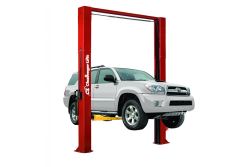
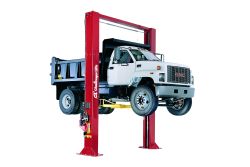
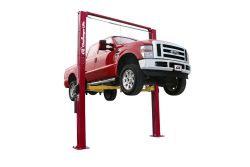
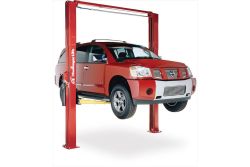
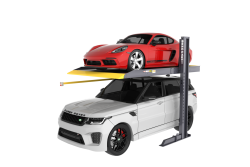
PL-6000DCX
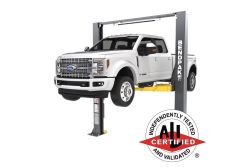
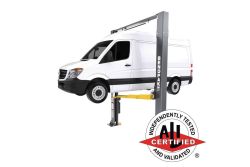
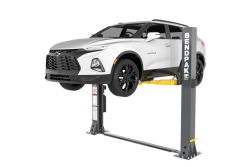
BendPak 9APF Open-Top Two-Post Lift for Low Ceilings - 9,000 lb Capacity
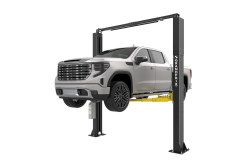
GrandPrix GP-10C Two Post Car Lift - 10,000-Lb Capacity
$3,795.00
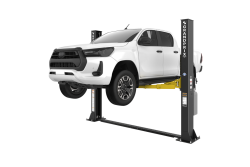
GrandPrix GP-9LC Two Post Car Lift - 9,000-Lb Capacity - Floorplate
$3,495.00
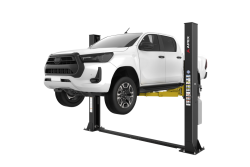
APEX AL9LC Two Post Car Lift - 9,000-Lb Capacity - Floorplate
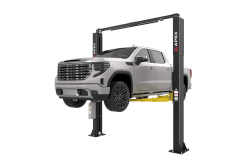
APEX AL10C Two Post Car Lift - 10,000-Lb Capacity
Two-post Lift FAQs
How does a two-post car lift work?
Two-post car lifts operate using a hydraulic system that powers two vertical columns with lifting arms. When activated, hydraulic fluid pushes pistons that raise the synchronized lifting arms, which connect to your vehicle's designated lifting points. The vehicle is elevated between the two posts, leaving the undercarriage completely accessible for maintenance and repairs.
Most two-post lifts feature either a symmetric or asymmetric design. Symmetric lifts center the vehicle's weight between the posts, while asymmetric lifts position the vehicle slightly toward the rear, allowing better door access.
What are the different types of 2-post lifts?
Two primary types of two-post lifts dominate the market: overhead and baseplate models.
Overhead two-post lifts feature a stabilizing bar connecting the tops of both columns. This design distributes weight evenly and provides excellent stability without requiring floor anchoring in some models. The overhead design makes these lifts ideal for professional shops with adequate ceiling height.
Baseplate two-post lifts have no overhead connection. Instead, they utilize a wide base plate that runs between the two columns beneath the floor. This design works for locations with height restrictions since it requires less vertical clearance than overhead models. The absence of an overhead bar provides unrestricted access for taller vehicles.
What is a two-post lift vs a four-post lift?
The main difference between two-post and four-post lifts lies in design and functionality. Two-post lifts excel at providing complete undercarriage access, making them ideal for extensive mechanical work, exhaust system repairs, and drivetrain service. They lift the vehicle by its frame at designated lifting points so the wheels hang freely.
Four-post car lifts, alternatively, support the vehicle by its tires on wide runways. This design makes them better suited for wheel alignment, detailing, and long-term storage. While they offer greater stability and typically higher weight capacities, they provide less undercarriage access without additional accessories.
Two-post lifts generally require less floor space but need higher ceilings than four-post models. They're also typically more affordable, but require concrete anchoring for safety.
What is the average pricing of two-post lifts?
Two-post lift pricing varies based on several factors, including lifting capacity, features, and brand reputation. Entry-level models suitable for lighter vehicles and home garages start at the lower end of the price spectrum. Professional-grade two-post lifts with higher capacities and advanced safety features represent a more significant investment. Additional factors affecting price include shipping costs, installation requirements, and any optional accessories you might need.
Commercial-quality two-post lifts from premium manufacturers may have higher prices but offer superior reliability, longevity, and safety features. Investing in a quality lift from a reputable manufacturer often proves more economical over time due to reduced maintenance costs and longer service life.
What is a two-post lift’s weight capacity?
Two-post lift weight capacities typically range from 7,000 to 18,000 pounds, with the most common models for automotive use rated at 7,000 to 10,000 pounds. This capacity range accommodates everything from SUVs to light pickup trucks and passenger cars.
When selecting a car lift, look for a capacity that exceeds your heaviest vehicle by at least 1,000 pounds. This safety margin accounts for uneven weight distribution and any additional tools or parts that might be on the car during lifting.
For professional shops servicing a variety of vehicles, a 10,000-pound capacity lift often provides the versatility needed for most passenger vehicles and light trucks. Shops specializing in larger vehicles like heavy-duty trucks or commercial equipment should consider models in the 12,000-18,000 pound range.
Always verify that your chosen lift is ANSI/ALI ALCTV certified, ensuring it meets rigorous safety and performance standards regardless of its rated capacity.
How far should a two-post lift be from the wall?
For optimal safety and functionality, position your two-post lift at least 9 to 12 feet from any wall. This clearance allows for proper installation, maintenance post access, and accommodation of the lift's movement during operation.
Symmetric two-post lifts typically require equal clearance on both sides, while asymmetric models may need additional space on the side where the longer arms extend. The specific requirements vary by manufacturer and model, so check the installation manual for exact specifications.
Beyond the minimum wall clearance, consider the overall workspace around the lift. Allow sufficient room for vehicle doors to open fully and for technicians to work comfortably around the elevated vehicle. For most professional installations, planning for 3 to 4 feet of clear space around the perimeter of the lift area ensures a safe, efficient work environment.
How tall are two-post lifts? What ceiling height is needed?
Standard two-post lifts typically range from 11 to 12 feet in overall height, though extended models can reach up to 14 feet. To determine the required ceiling height, add the lift's maximum rise height with the height of your tallest vehicle, and then an additional 6-12 inches of safety clearance.
For most automotive applications with standard ceiling heights of 12 to 14 feet, a lift with a rise height of 72 to 78 inches works well. This provides sufficient elevation for comfortable standing access underneath most vehicles while maintaining adequate overhead clearance.
For shops with lower ceilings, specialized low-ceiling models are available, some requiring as little as 9.5 feet of clearance. Alternatively, if you have height restrictions but still need full undercarriage access, consider the MaxJax portable two-post lift system, which offers the functionality of a traditional two-post lift but with a much lower overall height requirement.
Always measure your specific space carefully and consult the manufacturer's specifications before purchasing to ensure proper fit and safe operation.
How much does it cost to install a 2-post lift?
Installation costs depend on factors including your location, lift model, and garage's conditions. The installation process typically involves concrete assessment, precise positioning, securing the lift to the floor with anchors, hydraulic system setup, and comprehensive testing. Additional factors that may affect installation costs include electrical work if your garage needs upgraded wiring, concrete reinforcement if your existing floor isn't thick enough, and any special accommodations for your specific space configuration.
Professional installation is highly recommended to ensure safety and proper functionality. Some manufacturers may include basic installation in their pricing, while others offer it as an additional service.
What two-post lift is best?
BendPak consistently ranks as the industry leader in two-post lifts, offering exceptional build quality, reliability, and comprehensive warranties. Their XPR series provides options for virtually every application, from home garages to professional service centers. BendPak's lifts feature innovative Clearfloor™ designs, precision-engineered components, and ALI/ETL certification for guaranteed safety.
MaxJax also offers unique portable two-post lift systems perfect for spaces with height restrictions or where permanent installation isn't practical. These innovative lifts provide the functionality of traditional two-post models but can be stored away when not in use.
When determining which lift is best for your specific needs, consider several factors: the types and weights of vehicles you'll be servicing, your available space dimensions, frequency of use, and budget constraints. Regardless of brand, always prioritize lifts with ALI/ETL certification, which ensures they meet rigorous safety and performance standards.
Ready to talk two-post lifts?
We have product specialists with years of experience ready to answer your questions and help you through the car lift buying process.
We're here Mon-Fri, 7am to 6:30pm CT