
Mounting and demounting tires can be time-consuming, messy, and physically demanding, especially when using outdated or manual tools. As vehicles evolve with larger wheels and stronger rubber, traditional methods can slow you down, damage rims, and drain productivity in your garage or workshop.
Finding the best tire changers can solve these problems. They use advanced clamping systems, assist arms, and precise air or electric power to make tire changes faster, safer, and easier for both professionals and home mechanics. Instead of struggling with pry bars and bead breakers, you complete clean, damage-free tire swaps in minutes.
Learn how the best tire changers work, what makes them stand out, and how to choose the right one for your shop.
Best Tire Changers
As the demand for efficiency and precision grows in auto workshops, investing in a reliable tire changer has never been more important. Here are some of the best tire changers that combine speed, durability, and advanced technology to make every tire replacement faster and more efficient:
- Ranger

Ranger uses patented RimGuard protection technology to handle every wheel with care, preventing costly rim damage and giving technicians the confidence to work on even the most expensive alloy or low-profile tires. Designed for performance and precision, these machines maintain a smooth workflow, ensuring professional results.
Ranger also backs its tire changers with a solid warranty, giving you peace of mind long after your purchase. Each machine comes with 24 months of structural coverage, 12 months on operating components, 12 months of labor, and free ground shipping for warranty repairs.
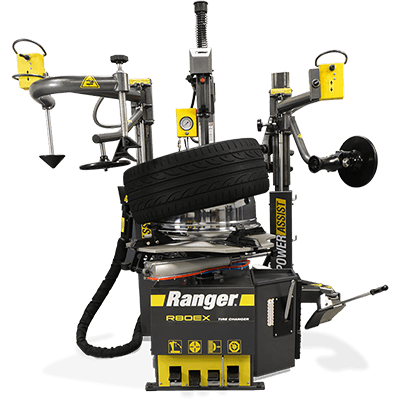
Explore Ranger Tire Changers now to unlock next-level speed and precision for your shop.
- Coats

Coats RC Series Rim Clamp Tire Changers are built for regular use in professional shops. The RC-55E is an electric-operated model that uses the RC Robo-Arm to keep the top bead in the drop center during mounting, which helps with stiff or low-profile tires. Its design focuses on controlled bead handling and reduced manual effort so technicians can move through tire work more efficiently.

- Hunter

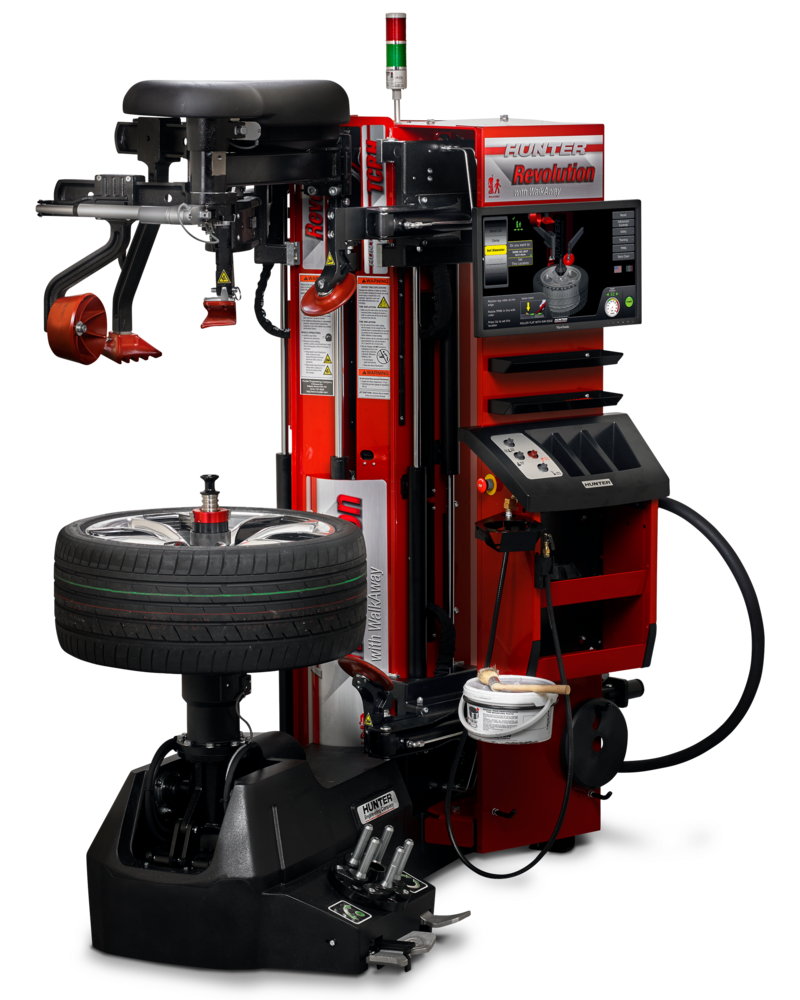
Hunter manufactures a full line of tire changers for passenger and commercial vehicles. This includes its fully automatic Revolution and Maverick models, center-clamp machines, table-top units, and heavy-duty truck changers. The lineup covers standard automotive wheels, larger commercial assemblies, and mobile service setups, with optional kits for motorcycle tires.
Hunter also provides installation help, training, and ongoing service through their North American field network.
- Atlas

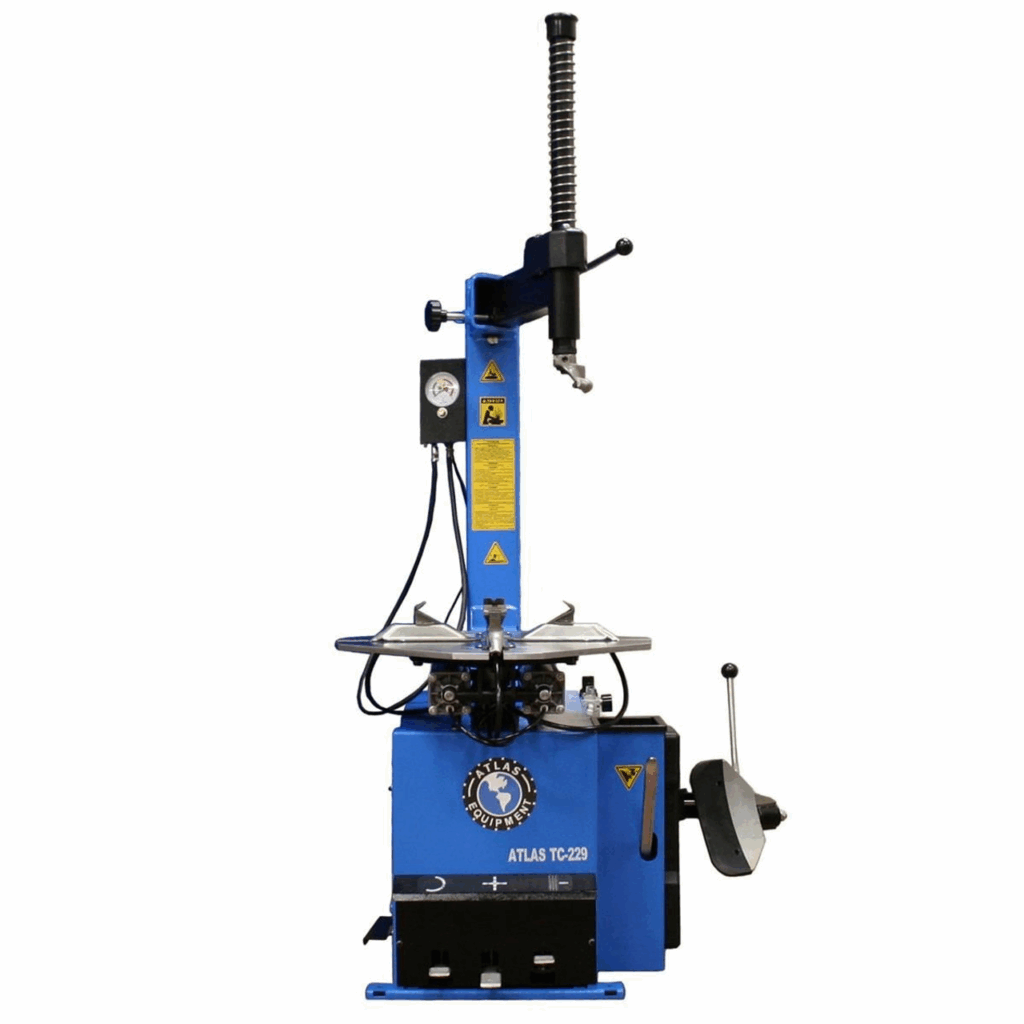
Atlas manufactures tire changers for varied shop setups. Models range from compact units to heavy-duty machines for trucks, SUVs, and tractors. Features include bead breakers, adjustable turntable jaws, and bead blaster systems for mounting and demounting.
Each Atlas tire changer includes an inflator, gauge, oiler, filter, and regulator. Configurations range from standard passenger vehicles to agricultural equipment.
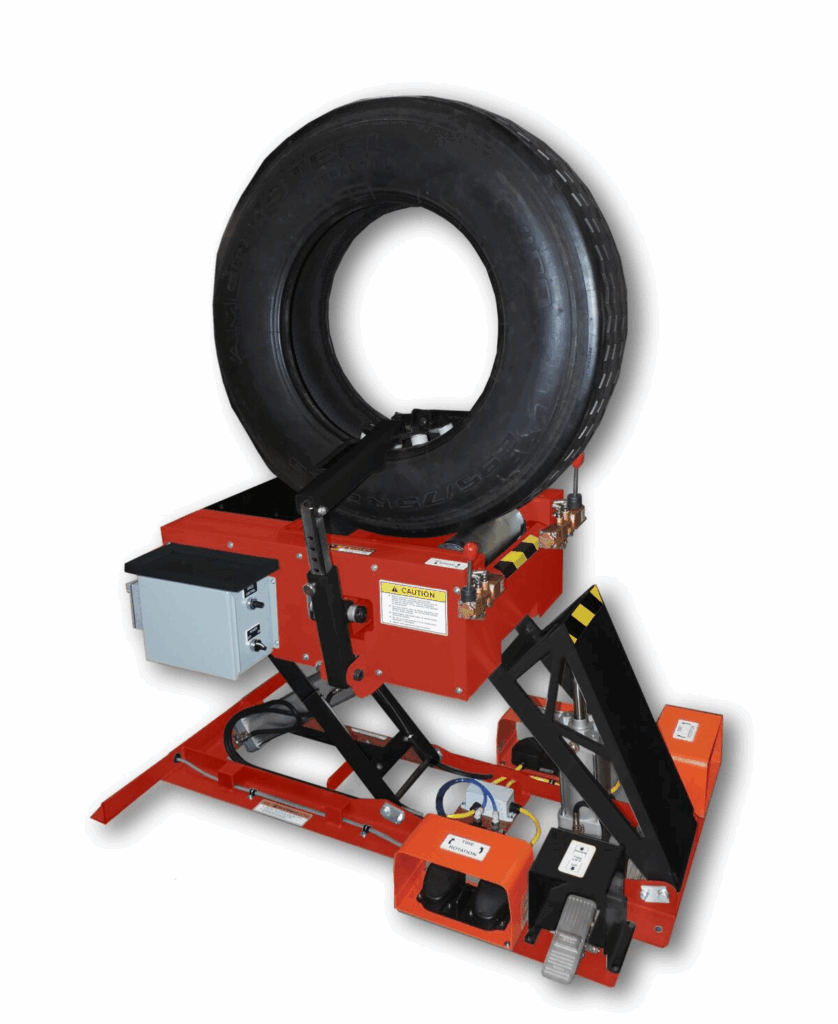
- Branick

Branick has manufactured automotive and tire service equipment in the U.S. since 1917. The company produces tire changers, tire spreaders, air jacks, tire inflation cages, tire repair tools, and nitrogen tire-inflation systems. Branick holds patents tied to designs such as the original tire spreader, with ongoing R&D supporting new models.
- Corghi

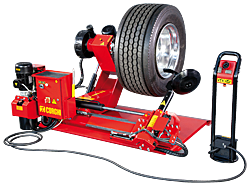
Corghi tire changers deliver precision, durability, and automation for various vehicles. They feature heavy-duty construction, stainless steel components, self-centering wheel clamping, and automatic tool movement to protect rims, speed tire changes, and improve shop efficiency.
- Hofmann

Hofmann tire changers combine advanced technology, precision, and durability to deliver reliable performance in every task. Designed to handle a wide range of rim widths and tire types, they enhance productivity by offering exceptional speed, versatility, and safety, making them essential tools for efficient automotive repair.

- Triumph

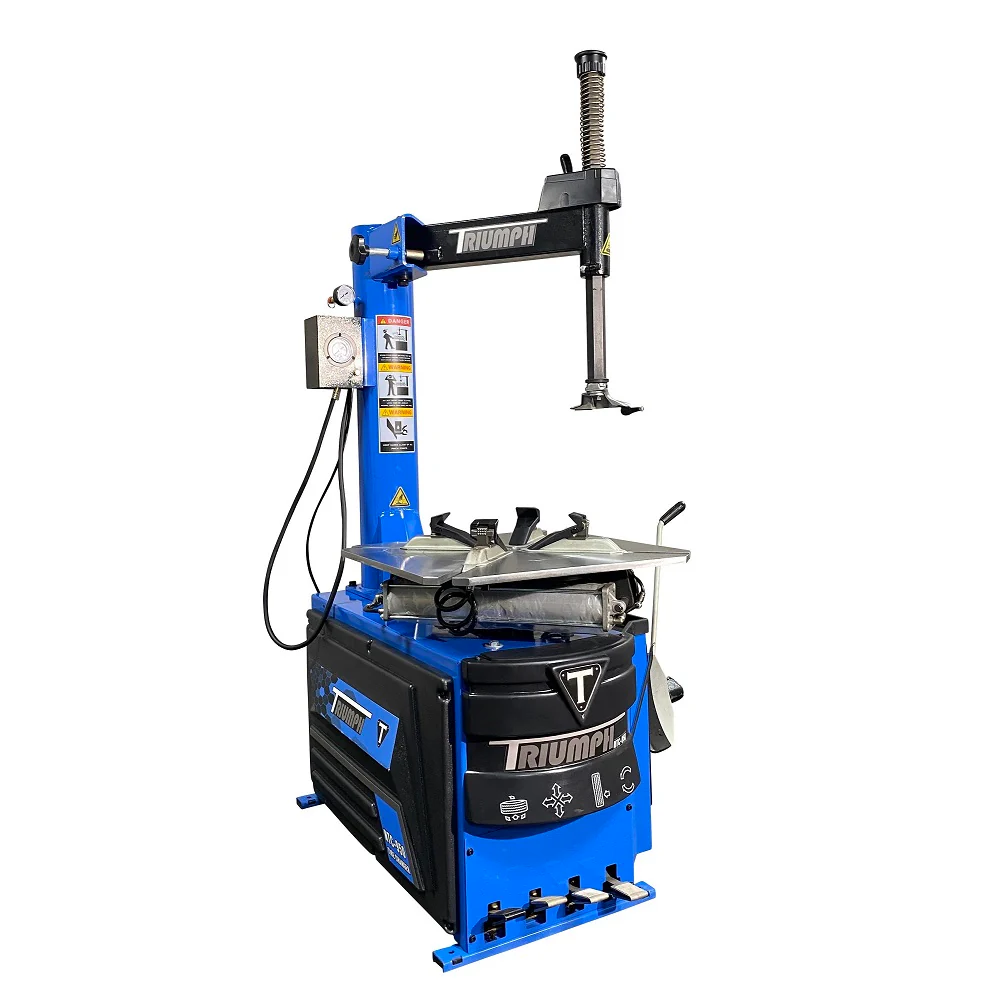
Triumph NTC-950 is a stand-alone wheel clamp tire changer with a clamping range up to 28 inches, a 5,500 lb bead breaker, and an integrated bead blast system. It runs on a 1.5 HP, 110-volt motor and is designed for cars and light trucks. The base unit ships without helper arms, but the design allows one or two assist arms to be added later as service volume grows.
- Mayflower

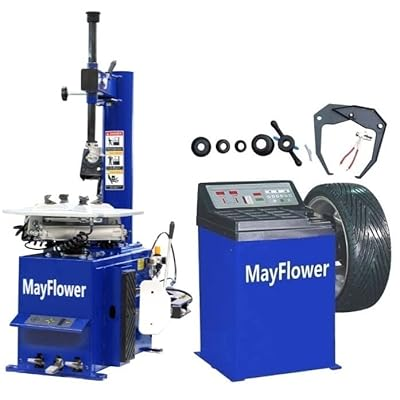
Mayflower offers tire changer and wheel balancer combo units for general automotive work. The 950 and 680 models are sold together as a paired setup for shops that want mounting, demounting, and balancing equipment in one package. The company provides product manuals, policies, and support through its website, and orders are shipped directly to buyers with options for terminal pickup or residential delivery.
- MechMaxx

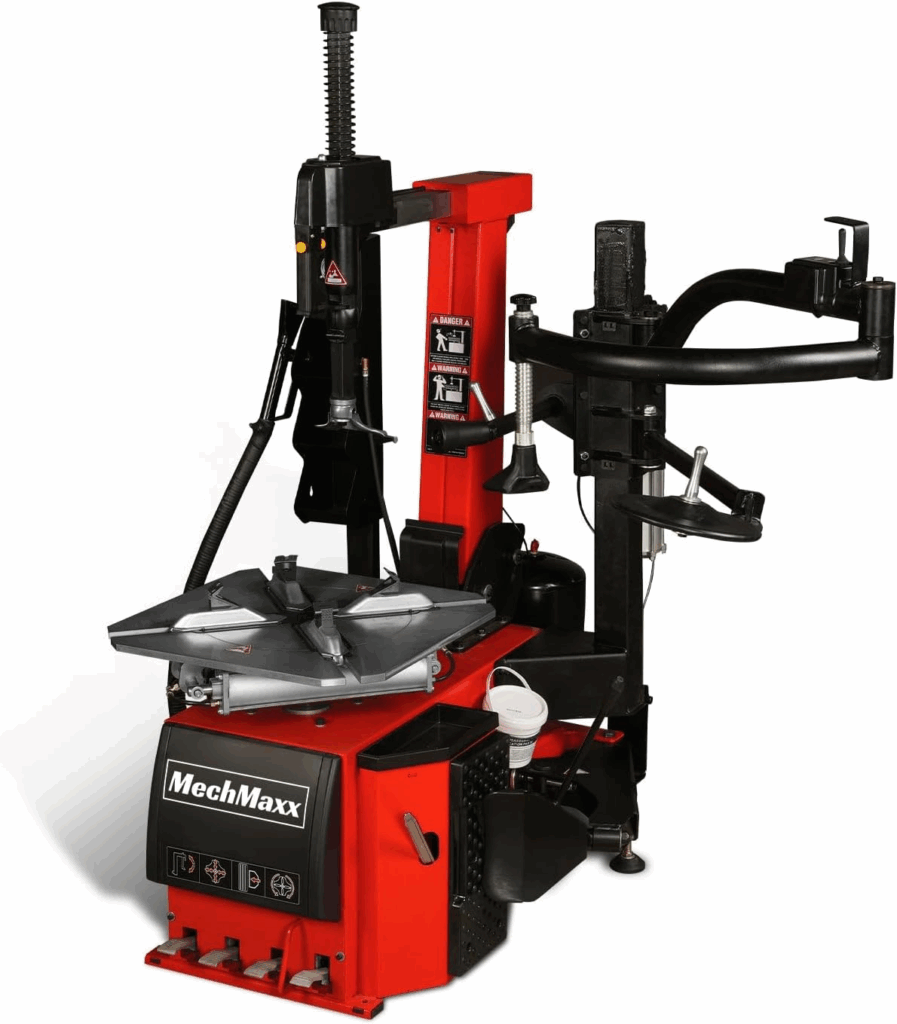
MechMaxx tire changers handle tire replacement across a range of wheel sizes. Models come in manual and electric versions for home garages and professional workshops. Each unit includes a clamping table and bead-breaking system for mounting and demounting, with controls arranged for straightforward daily use.
- Katool

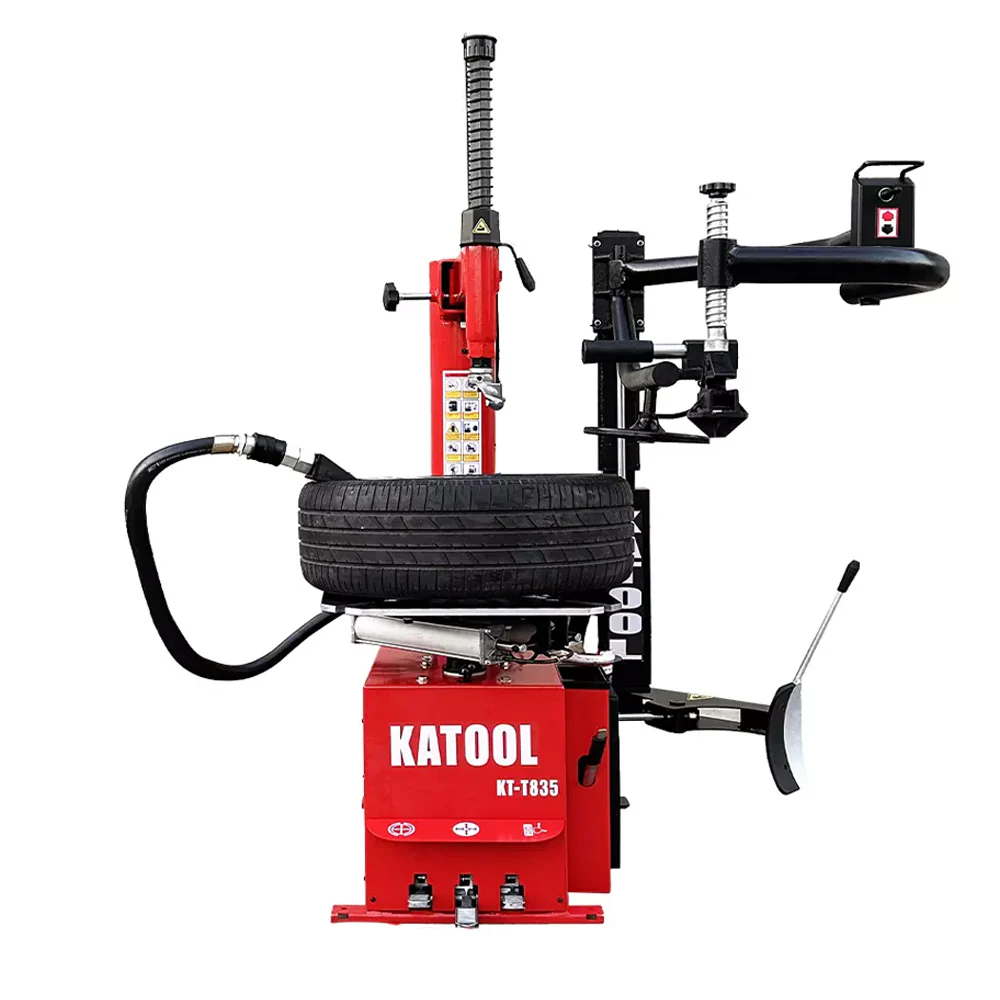
Katool tire changers handle tire service across a range of wheel sizes, with manual and electric options for home garages and professional shops. Each machine includes a clamping mechanism, motor-driven turntable, and bead-breaking system arranged for standard mounting and demounting procedures on common passenger vehicle wheels.
How to Choose a Tire Changer That Fits Your Needs
Choosing the right tire changer depends on your workflow, vehicle types, and shop size. Here are key factors to consider when choosing a tire changer that fits your needs:
Tire Size Range
Choose a tire changer that matches the types of vehicles you service most. If your shop handles everything from compact cars to trucks or SUVs, choose a machine with a wide clamping range to accommodate various wheel sizes. This ensures flexibility and prevents downtime when working on different tire types.
Shop or Garage Size
Your available space determines the type of tire changer you can install. Compact models are best suited for small garages or home setups, while larger, fully automatic machines are ideal for busy workshops with high traffic. Always measure your space to make sure the equipment fits comfortably without restricting movement.
Power Supply
Tire changers run on either electric or pneumatic power. Smaller electric models are ideal for light-duty work, while air-powered or hybrid machines provide the strength needed for continuous, heavy use. Choose a power option that aligns with your shop’s workflow and energy capacity.
Ease of Use
A user-friendly tire changer allows you to work more efficiently and reduces the chances of making mistakes. Choose models with ergonomic pedals, assist arms, and intuitive controls to simplify operation. Maintain and set up the machine quickly to keep your workflow smooth and your productivity high, even during busy hours.
Service Capabilities
Consider how well the tire changer handles different wheel types and materials. Choose machines with bead blasters, leverless designs, and rim protection systems for efficient service on modern alloy and low-profile tires. The more adaptable your tire changer, the better it can grow with your business.
Types of Tire Changers
Tire changers come in three main types: manual, electric, and automatic. Each is suited to different workloads and budgets.
Manual tire changers: A basic, low-cost option with simple bead-breaking and mounting tools. They require significant physical effort from technicians.
Electric tire changers: Ideal for small or new shops handling common tire types. They provide powered assistance without an air compressor but require proper voltage and a slightly higher budget.
Automatic tire changers: The most advanced option for low-profile and run-flat tires. They handle most of the work with minimal manual input but require the highest investment and training.
In addition to manual, electric, and automatic models, there are also specialized tire changers based on mounting style and operating mechanisms. These include:
- Rim clamp: Holds the wheel by the rim using adjustable tabletop clamps. This allows fast mounting and demounting across a wide range of tire and wheel sizes.
- Center post: Secures the wheel through the hub with a central shaft. It provides balanced handling for specialty, luxury, and custom wheels.
- Swing arm: Mounts the demount arm on a swinging mechanism. This creates more space for straightforward rim and tire placement.
- Tilt-back changers: Move the vertical column backward to open additional working room. This supports larger or wider assemblies during mounting and demounting.
- Leverless: Handles low-profile and run-flat tires using bead-lifting systems and central clamping. This reduces manual effort and lowers the risk of bead damage.
For shops that need top-tier performance and reliability, Wrenchers carries brands like BendPak. These tire changers are built for high-volume automotive and fleet use. BendPak offers models for passenger cars, trucks, and commercial vans. Support includes financing options, documentation, and technical assistance through its website and dealer network.
Discover the best tire changers with Wrenchers.
Discover the Best Tire Changer for Your Shop With Wrenchers
The best tire changer doesn’t just mount and demount tires; it improves efficiency, ensures technician safety, and enhances customer satisfaction. Choosing the right model gives your shop the edge to handle more jobs with speed and precision.
Modern tire changers combine smart design with advanced technology to meet a wide range of shop needs. Options range from manual units for smaller garages to automatic models designed for high-volume operations. Features like assist arms, bead blasters, and rim protection systems make every job smoother and more professional.
Wrenchers stands out as a leading global distributor of high-quality lifting systems, specialty tools, and shop equipment. From tire changers and wheel balancers to service lifts and diagnostic equipment, Wrenchers delivers durable, performance-driven solutions. These products are trusted by technicians, dealers, and industrial users around the world.
Shop Tire Changers at Wrenchers today and equip your shop with the best tools in the industry!
Best Tire Changers FAQs
What are the benefits of having a tire changer?
A tire changer allows your shop to handle tire work in-house instead of relying on a third party. This keeps both revenue and control under your roof. It also reduces manual pry-bar work, lowering physical effort and helping results stay consistent across technicians.
Proper clamping and bead-breaking systems also help protect rims and reduce damage claims. Over time, faster turnaround, increased service capacity, and fewer re-dos can justify the cost of the machine. These benefits also help support a steadier workflow in the bay.
What kind of maintenance is required for a tire changer?
Tire changer maintenance is mostly about regular inspection and basic care. Clean the turntable, clamps, and bead breaker often so that grit does not build up in moving parts. It’s also important to lubricate pivot points and sliding components according to the manufacturer’s schedule.
Additionally, check air lines, hoses, and fittings for leaks, and verify that operating pressure stays within the recommended range. Tighten bolts, inspect plastic protectors on clamps and mount heads, and replace worn pieces before they cause rim damage. A quick weekly inspection plus a deeper check on a fixed schedule keeps the machine safe to use and extends its service life. With routine maintenance, your machine will stay efficient, reliable, and ready for daily use.
What are the best tire changing machines for amateurs?
For beginners or home garages, the best tire changer depends on a few factors. Space, power access, and how often you plan to use it. A good starter machine typically features a simple control layout and clear setup markings. It also offers a modest clamping range that covers most passenger and light truck wheels.
Look for standard 110 V power, basic rim protection, and a bead breaker that matches the tire size. At this level, compact dimensions, clear instructions, and easy access to parts and support matter more than advanced automation or high-volume features.
