Weight Distribution
How is vehicle weight distributed between the front and rear axles?

Two-Post Lift Buying Guide
Compare vehicle positioning, lift-arm geometry, door clearance and typical applications to better understand which two-post lift design fits the vehicles your shop services.
Compare the Geometry
At Wrenchers we know that your workdays are busy in the garage. Pulling vehicles into the shop, getting them positioned on a lift and making repairs means the equipment around you needs to work with the vehicles you service.
Some vehicles fit the design of a particular two-post lift better than others. One design may provide more room to enter and exit a vehicle next to the column, while another may work particularly well with a specific vehicle size or weight placement.
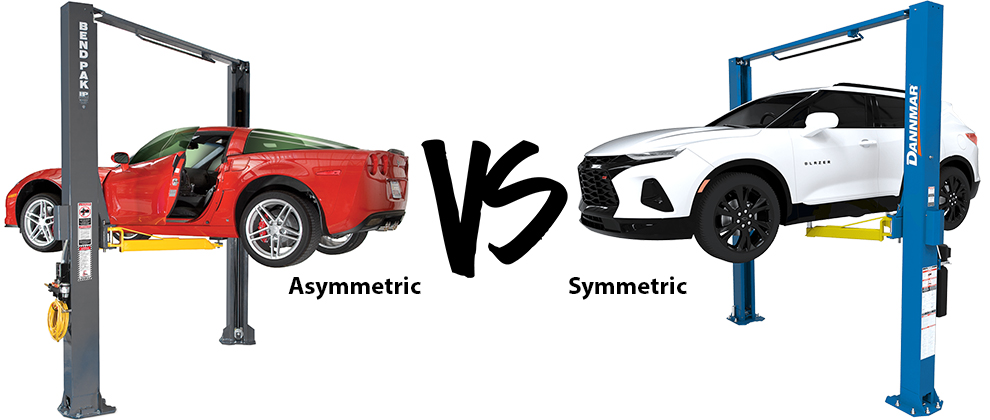
Two-post auto lifts are typically designed around two basic geometric classes: Asymmetric and Symmetric. These terms often refer to lift-column positioning and lift-arm assembly geometry.
Start Here
Vehicle geometry and weight distribution are good starting points when comparing asymmetric and symmetric two-post lifts.
How is vehicle weight distributed between the front and rear axles?
Where does the vehicle door fall relative to the lift columns?
Consider the total length of the vehicles you commonly service.
Vehicle wheelbase affects where the vehicle sits relative to the columns.
Account for accessories, equipment or other loads carried by the vehicle.
At a Glance
The source highlights three fundamental differences for each configuration.
See What Makes Asymmetric Two-Post Auto Lifts Different
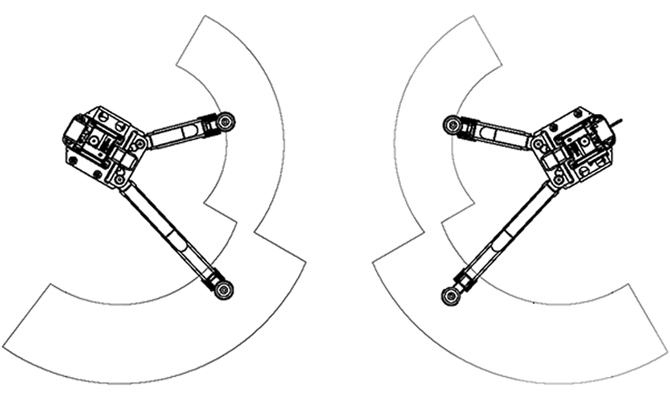
Asymmetric auto lifts, such as those provided by BendPak in the source, feature a 30-degree rotated column angle. Each post angles slightly outward toward the rear of the lift to provide useful vehicle-door opening room.
The rotated columns also enable short and long lift arms to pivot asymmetrically. These short front and longer rear arms allow the vehicle to be positioned approximately one-third to the front and two-thirds to the rear, allowing the arm assemblies to reach farther rearward.
Since many passenger cars carry much of their weight over the front axle, the shorter front and longer rear lift-arm assemblies can work well for front-wheel-drive passenger cars, light-duty pickup trucks and crossover-type SUVs.
The source also notes that not every asymmetric lift uses rotated columns. Some designs instead use angled lift-arm assemblies mounted to squarely positioned columns.
Explore BendPak two-post lifts for asymmetric options referenced by the original guide.

See What Makes Symmetric Two-Post Auto Lifts Different
A symmetric two-post auto lift uses equally situated columns and equal-length lift-arm assemblies. These lifts incorporate squared columns so that the lift-arm assemblies pivot symmetrically through an even arc.
Because a symmetric lift features equal-length lift arms positioned from squared posts, the design can accommodate vehicles that are long, often heavy, and generally have a more centered weight placement from bumper to bumper.
Full-size long-bed trucks and full-size SUVs such as Suburbans are examples provided in the source. When vehicles like these are positioned on a symmetric lift, the vehicle is generally centered between the posts and the center of gravity is typically in the same area.
Trucks and SUVs with high ground clearance may require special adapters to contact the frame lift points. Explore car lift accessories for available lift accessories and adapters.
Remember
To choose between an asymmetric and symmetric lift, begin by evaluating the types and sizes of vehicles you commonly repair, including their weight distribution.
Vehicles that carry most of their weight over the front axle area will generally be better suited to an asymmetric configuration, while larger, longer and heavier vehicles with more uniform weight distribution are commonly suited to a symmetric configuration.
The source also notes that a symmetric two-post lift with adjustable lift-arm assemblies may be able to accommodate many front-wheel-drive vehicles, short-bed pickups and sports cars. Always verify the vehicle, lift and lift-point requirements before lifting.
Available From Wrenchers




Find Your Two-Post Lift
Consider vehicle size, weight distribution, wheelbase, door position and the types of vehicles you service when comparing lift configurations.
At Wrenchers we know that your workdays are busy in the garage. Pulling vehicles into the shop, jumping out of them, racking each vehicle on a lift, and making repairs leaves your days with a lot of items checked off of your To-Do list. One of the many things you have learned is that some vehicles fit the design of a particular two-post lift better than others. This means some two-post lifts might provide more room to enter and exit the vehicle next to the column, or have great drive-through clearance, and others really respond well to a specific weight placement while lifting.
Why is this? This is because two-post auto lifts are typically designed in one of two different geometric classes. Our engineers call these two designs by their technical terms, “Asymmetric” and “Symmetric” which often refers to the lift column positioning and lift arm assembly angles. Sure, there are dozens of added features available within each. However, both of the two basic styles provides unique working angles and vehicle lifting load centers, largely to best suit a range of vehicle weight distribution, vehicle sizes, and more. But which one is the better for what you do?
Yes, there are many benefits, features, and applications to consider. To start with, consider these 5 points first:
“Asymmetric” or “Symmetric”? Fast 5 Questions to Begin Choosing
Wrenchers is here to provide you with the two-post auto lift information to help you select the most applicable two-post column lift that will work well with your busy shop. With the right lift selected and installed, you will have one more item to check off of your To-Do list.
Quick 3 Differences - “Asymmetric” two-post auto lift:
Quick 3 Differences- “Symmetric” two-post auto lift:
See What Makes Asymmetric Two-Post Auto Lifts Different
“Asymmetric” auto lifts, as those provided by BendPak feature a 30-degree rotated column angle. This means that each post equally angles slightly outward toward the rear of the lift to allow useful vehicle door opening “swing” room. The 30-degree rotated column also enables the short and long lift arms to pivot asymmetrically, to complement the rotated column angles. The use of these short and long lift arms additionally allows the vehicle to be loaded on the lift as one-third to the front and two thirds to the rear. In other words, so the arm assemblies can reach farther to the rear. The benefit to this is that there is even more door opening room netted behind the column.
Since many of today’s passenger cars carry most of their weight over the front axles, the shorter front and longer rear lift arm assemblies are optimal for vehicles that are front wheel drive passenger cars, light duty pickup trucks, or crossover type SUV’s. This is because the asymmetric lift design allows a vehicle to be loaded on the lift with a rearward weight bias, thus netting a more equal overall balance.
Note that many other Asymmetric lifts from other companies do not use rotated columns, but instead simply use angled lift arm assemblies mounted to squarely placed columns, to provide asymmetric angles. Those types, do not have the added benefit of angled columns that open to the rear to allow more door opening.
Check out Wrenchers and look for BendPak lifts to find some great Asymmetric two-post lifts that feature Asymmetric rotated columns with accompanying short and long lift arm assemblies.
See What Makes Symmetric Two-Post Auto Lifts Different
When you think of a Symmetric two-post auto lift, think of a standard traditional two-post lift with equally situated columns and equal length lift arm assemblies. These “Symmetric” auto lifts incorporate squared columns (at right angles) so that the lift arm assemblies will pivot symmetrically through an even arc.
Since a symmetrical lift features equal length lift arms positioned from squared posts, they have the geometric ability to easily accommodate vehicles that are long, often heavy, and generally have a centered weight placement from bumper to bumper. This especially means many full-size long bed trucks and full-size SUV’s such as Suburbans. When vehicles as these are typically placed on a symmetric lift, the vehicle is positioned directly centered between the posts and the center-of-gravity moment is typically in the same area. Additionally, with larger vehicles this often means that since the front door is ahead of the posts, the front door can be fully opened.
Note that often trucks and SUVs with high ground clearance may require special adaptors (Car Lift Accessories) to contact the frame’s lift points. While the lift arms are of a symmetrical design, meaning the front and rear arms are of the same length, they also include points that can be extended to accommodate a wide range of vehicles with stackable adapters.
To choose the appropriate style lift whether “Asymmetric” or “Symmetric”, you will want to begin by evaluating what types and sizes of vehicles you commonly repair. This also means the vehicle’s weight distribution. Keep in mind vehicles that carry most of their weight over the front axle area will generally be best served with an “Asymmetric” lift than a vehicle that is heavier with more uniform weight distribution. In those cases, a “Symmetric” lift should serve larger, longer, and heavier vehicles best.
Also note that in many case a “Symmetric” two-post lift with adjustable lift arm assemblies can be adjusted to accommodate and lift many FWD vehicles, short bed pickups, and sports cars. However the benefits of an Asymmetric lift will not be available. But always be sure to check everything before lifting.
Larger vehicles often carry their weight more evenly across the front and rear axles. This means their size and weight distribution can lend itself well to an asymmetric lift.